
October 18, 2026 / Cosmetic Dentistry
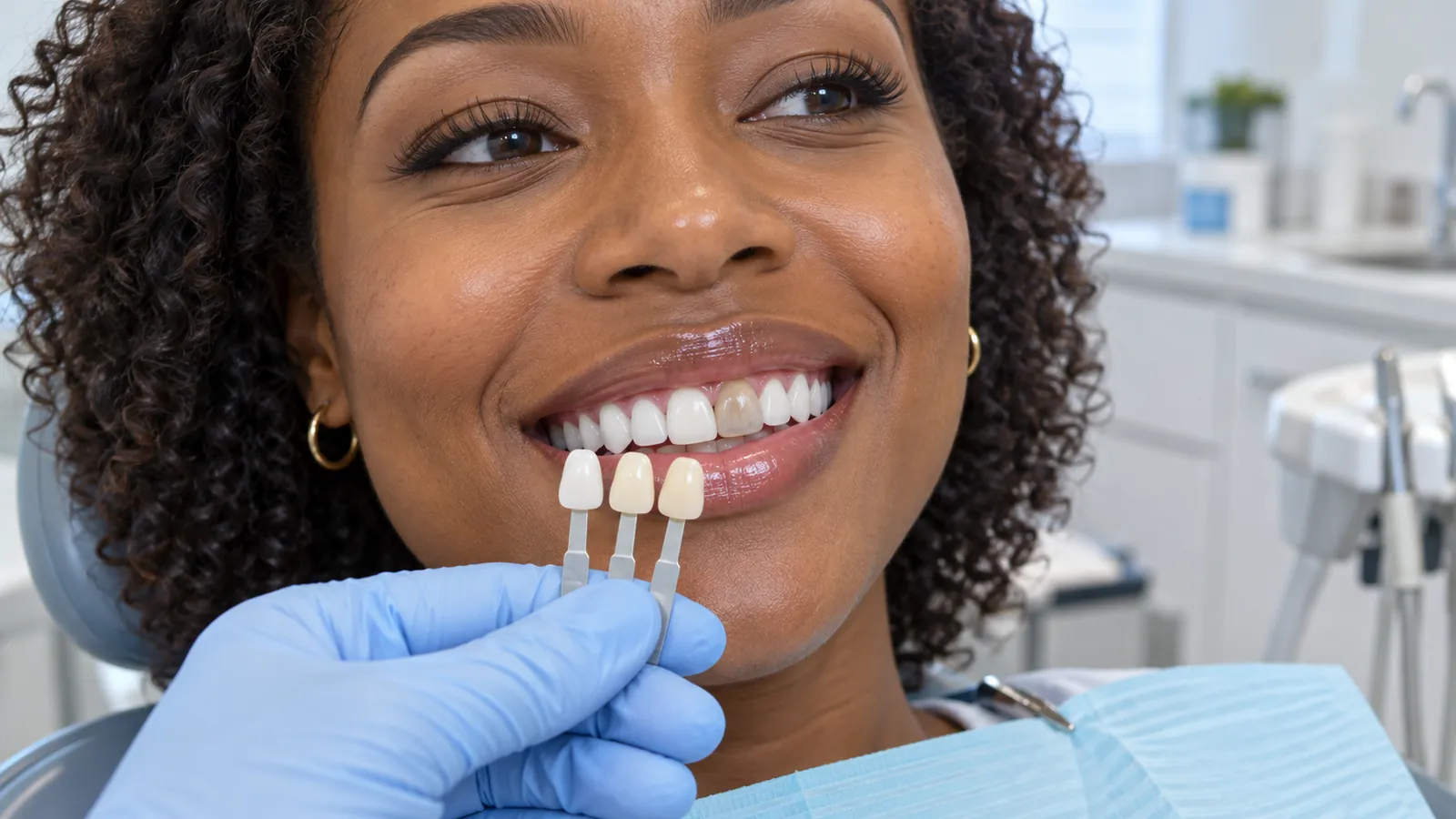
A single front tooth may be darker because of staining on its surface, dental work already in the tooth or changes beneath the enamel. A past injury can also be relevant. The colour is a clue to investigate, not a diagnosis, and whitening is not automatically the right response.
If you are searching for a cosmetic dentist in Woodbridge, begin by asking for an assessment of the tooth rather than choosing a whitening product or veneer first. The dentist needs to establish what has changed, whether the tooth is healthy and which options could reasonably improve the colour.
You may first notice the difference while looking at a video call or a recent family photograph. That does not necessarily mean the change happened that day. Different lighting can make an existing difference easier to see, and a restoration may stand out differently from the natural tooth beside it.
Try to work out what you can describe with confidence. Is the darker area near a filling, along the gumline or across the entire tooth? Was there an earlier chip or repair? Has someone mentioned the same tooth before? Bring those details without feeling that you need to explain the cause.
An old photograph can be useful if it shows the tooth clearly, but it cannot replace an examination. Filters, shadows and camera settings can make colour comparisons unreliable. The important information is that you have noticed a difference and would like it checked.
Do not dismiss a new change simply because the tooth still feels normal. Equally, do not assume a darker tooth is necessarily dying. Those conclusions go beyond what appearance can tell you and may push you toward the wrong treatment before the tooth has been assessed.
The first distinction is whether the colour is mainly on the outside or within the tooth. Surface stain may be associated with deposits or pigments on the enamel. Internal colour changes arise below the surface and need a different assessment.
A whitening toothpaste is not a diagnostic tool. If the tooth stays dark after brushing, that does not identify the cause, and scrubbing harder will not answer the question. Avoid scraping the area, using household chemicals or applying acidic mixtures to it.
The American Dental Association explains the limits of whitening, including that crowns, fillings and veneers do not bleach like natural teeth. If the darker area is restorative material, a product may change the neighbouring enamel without changing the material you are concerned about.
Tell the dentist what you have already used, how long you used it and whether sensitivity followed. Product names or photographs of packaging can help clarify the history. There is no need to keep trying stronger products while waiting for an answer about a single unusual tooth.
A tooth's history may reach further back than the moment you noticed its colour. Mention a childhood fall, a sports injury or a blow to the mouth, even if the tooth did not break. Also mention any past root canal, crown, filling or repair.
The American Association of Endodontists' root canal information describes how trauma and other problems can affect the pulp inside a tooth. That is one reason an assessment may include more than a visual colour check. It does not mean every darker tooth needs root canal treatment.
Be specific about symptoms. For example, “it hurts when I bite an apple” gives different information from “it looks darker but feels unchanged.” Explain whether sensitivity is new, whether it lingers and whether you have noticed swelling or a small bump on the gum. Let the dentist interpret those details rather than testing the tooth repeatedly yourself.
If colour change comes with increasing pain, swelling or fever, seek prompt dental advice. Difficulty breathing or swallowing requires emergency medical care. Do not wait for a planned cosmetic appointment when the symptoms are becoming urgent.
The dentist will consider the history, inspect the tooth and surrounding tissues and assess any existing dental work. Tests or imaging may be recommended to investigate the internal condition or another finding. Ask what each recommended step is intended to clarify.
A useful consultation separates two questions: does the tooth need care for its health, and what can be done about its appearance? Sometimes those questions lead to different steps. Treating an underlying problem may need to happen before the final colour decision.
For cosmetic dentistry in Woodbridge, Napa Dental lists services including bonding, veneers and tooth-coloured restorations. Discussing these options after the assessment helps keep the recommendation tied to the actual condition of the tooth.
You can make the visit more useful by explaining what a satisfactory improvement would mean to you. Perhaps you only want the tooth to attract less attention, or you are considering changes to several teeth. Tell the dentist whether the concern is colour alone, a previous repair, the tooth's shape or a combination.
Ask which findings are definite and whether anything needs monitoring or further investigation. A clear explanation is more valuable than an immediate cosmetic recommendation based only on the visible shade.
The appropriate treatment starts with the findings. Cleaning may address some external staining. A whitening approach may be discussed for suitable natural tooth discolouration. If a restoration is the issue, the dentist can explain whether it is sound and whether altering or replacing it is justified.
In some previously root-treated teeth, a clinician may consider internal bleaching after assessing the existing treatment and the tooth. This is different from putting an ordinary whitening product on the front surface. Ask about the indication, limitations and risks if it is raised; do not assume it is available or suitable in every case.
Bonding or a veneer may help mask colour in selected circumstances, while a crown may be considered when the tooth has broader restorative needs. Ask why the proposed option is appropriate and how much natural structure it would involve. Changing appearance does not itself treat infection or repair every structural problem.
Napa Dental's guide to professional teeth whitening discusses whitening choices more generally. A single dark tooth adds a separate question: will that tooth and the teeth around it respond in a way that produces a suitable match?
There may be more than one reasonable approach, each with trade-offs. Ask about preserving tooth structure, the likely appearance, maintenance and the possibility of later repairs. An improvement should be planned around your tooth, rather than a promise that one procedure works for every shade change.
When one front tooth is involved, the teeth beside it provide the reference. Explain whether you want to retain their present shade or hope to whiten your smile more broadly. That decision can affect the order in which cosmetic steps are considered.
Bring questions such as:
Ask the dentist to explain the recommendation using the actual tooth or images from the assessment. It is easier to understand a limitation when you can see the area it concerns. If something is unclear, ask for another explanation before agreeing to irreversible work.
A deadline, such as an upcoming event, is useful context but should not determine the diagnosis. Tell the office about your timing and ask what is realistic. Avoid making a rushed choice simply because a product or procedure is advertised as quick.
An old injury can be part of the explanation, so include it in the history even if you had no symptoms at the time. The dentist still needs to investigate the current tooth. The timing alone cannot confirm the cause.
No. A root canal recommendation depends on the condition of the pulp and the rest of the assessment, not colour alone. Ask what evidence supports the recommendation and whether any additional evaluation is needed.
No. They cannot reliably correct every single-tooth colour change, and dental restorations do not whiten like enamel. Before repeating or extending a whitening course, find out what is causing the difference and whether the product is suitable.
Yes. Dental materials can differ from neighbouring teeth, and an existing restoration may become more noticeable over time. An examination can clarify whether it remains healthy and functional or whether treatment should be considered.
Yes. A tooth can need assessment even when it does not hurt. Book a visit, explain when you noticed the change and mention any injury or previous treatment. Call sooner if pain, swelling or other symptoms appear.
If one front tooth looks darker, contact Napa Dental about an assessment in Woodbridge. Bring the history you know and describe the difference you would like addressed. Once the cause and condition of the tooth are understood, you can discuss appropriate options for helping it blend with your smile.
© 2026 Napa Dental| All Rights Reserved - Website design by Vitamin D - Marketing & Design