
August 24, 2026 / Cosmetic Dentistry
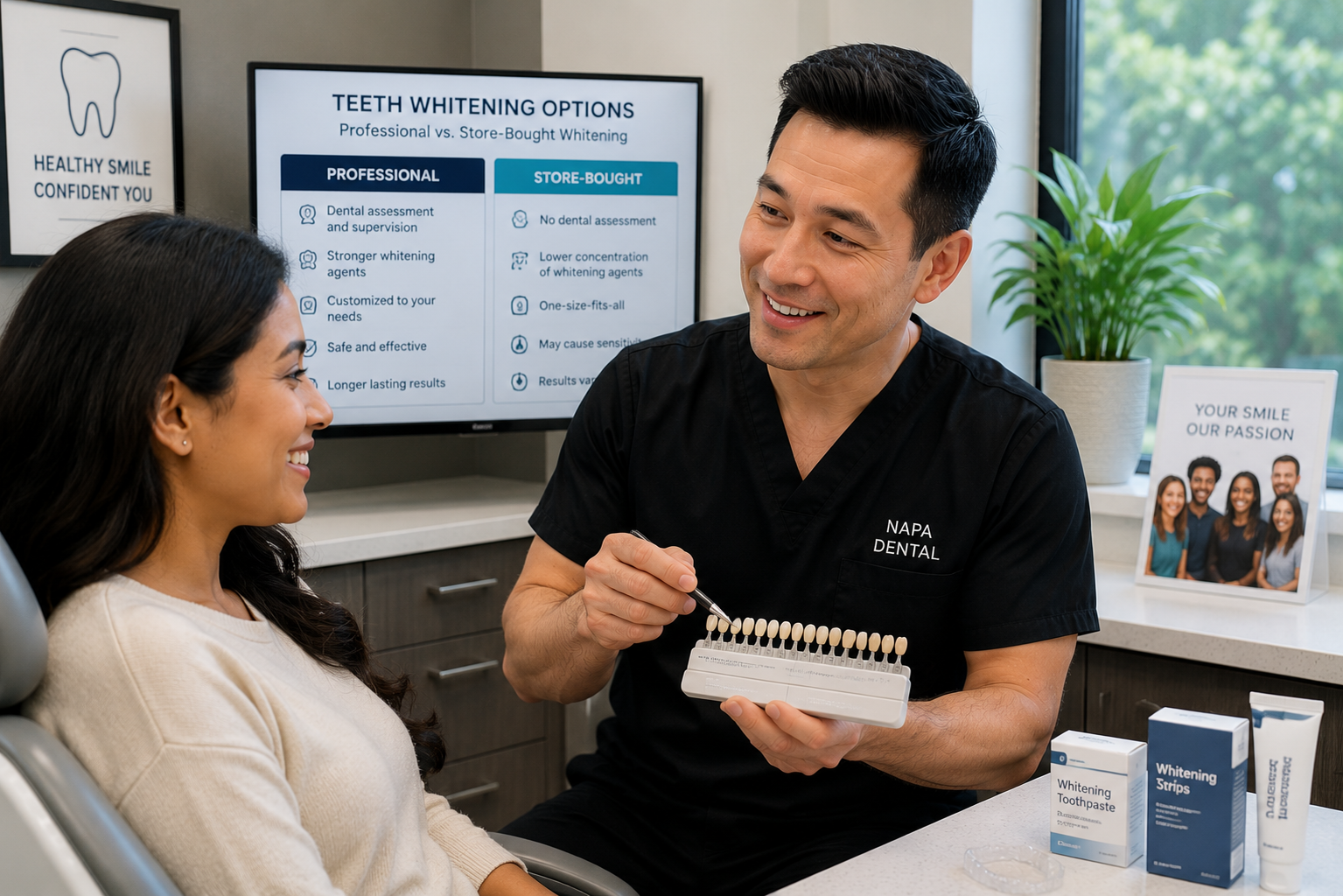
If you’re considering teeth whitening in Woodbridge, you’ve probably noticed there are plenty of options available. Whitening toothpaste, strips, gels, trays, and dentist-supervised treatments can all be used with the goal of making teeth look brighter. So what’s actually different about them?
The biggest difference isn’t simply how white your teeth may become. Professional whitening involves a dental assessment and guidance based on your individual teeth, gums, existing dental work, and whitening goals. Store-bought products are designed for general use and are typically chosen without an examination by a dentist.
Neither option is automatically right for everyone. The type of staining you have, your oral health, tooth sensitivity, and the presence of fillings, crowns, veneers, or bonding can all affect what makes sense for you.
Store-bought whitening products are convenient and widely available. They can appeal to people who want to try whitening as part of their regular oral care routine or who have relatively straightforward cosmetic concerns.
Professional whitening is different because it starts with an assessment. Rather than choosing a product based only on its packaging or general claims, you can discuss your teeth and your goals with a dental professional first.
For someone considering cosmetic dentistry in Woodbridge, that assessment can provide useful context. Your dentist can look at the condition of your teeth and gums, consider existing dental work, and explain what whitening may or may not change.
The choice also depends on what you expect from treatment. Someone hoping to make naturally healthy teeth look somewhat brighter may have different considerations from someone concerned about significant or unusual discolouration.
Store-bought whitening products come in several forms, including whitening toothpastes, strips, gels, and other at-home products. Their ingredients and directions vary, so it’s worth reading the product instructions carefully rather than assuming all whitening products work in the same way.
Some products are designed primarily to remove surface stains. Others contain whitening agents intended to lighten the colour of teeth.
The results can vary depending on the product, how it is used, and the type of staining present.
Whitening also has limitations. It does not necessarily change every type of tooth discolouration, and it doesn't whiten dental restorations in the same way it can affect natural tooth structure.
That matters if you have crowns, veneers, bonding, or fillings on visible teeth. Whitening your natural teeth may create a difference in colour between them and existing restorations.
Store-bought whitening isn't necessarily ineffective or inappropriate. The challenge is that you may not know whether the product is a good match for your particular situation without first having your teeth assessed.
Professional whitening begins with a dental assessment rather than simply selecting a product from a shelf.
A dentist can examine your teeth and gums and discuss the kind of staining you're concerned about. They can also consider existing dental work and whether there are oral health concerns that should be addressed before cosmetic whitening.
This doesn't mean professional whitening is automatically stronger or better for every person. Instead, the process allows the whitening approach to be considered in the context of your individual needs.
For patients exploring cosmetic dentistry, teeth whitening may be one part of a broader discussion about improving the appearance of their smile. Napa Dental provides cosmetic dental services in Woodbridge, including teeth whitening.
Professional guidance can also make expectations more realistic. Your dentist can explain whether the type of discolouration you're noticing is likely to respond to whitening and whether existing restorations could affect the overall appearance.
Tooth sensitivity is one of the concerns people often have about whitening. Some people experience temporary sensitivity during or after whitening, while others may have little or no sensitivity.
The likelihood and severity can depend on factors such as the condition of the teeth, the whitening approach, and individual sensitivity.
If you already have sensitive teeth, it’s worth discussing that with a dentist before starting a whitening treatment. A dental examination can also identify other potential sources of discomfort that may need attention.
Expectations matter, too.
Whitening doesn't necessarily make teeth an extremely bright shade, and results aren't identical from person to person. The original colour of your teeth and the type of staining can influence the change you see.
Existing dental work is another consideration. Crowns, veneers, bonding, and fillings are not whitened in the same way as natural teeth. If you have visible restorations, your dentist can explain how whitening may affect the overall appearance of your smile.
You don't necessarily need a dental consultation simply because you're interested in making your teeth brighter. There are, however, situations where speaking with a dentist first is especially useful.
Consider asking for professional guidance if you have tooth pain or sensitivity, gum concerns, visible cavities, cracked or damaged teeth, significant discolouration, or extensive dental work.
A dental assessment may also be helpful if you've tried whitening before and weren't happy with the results. The reason for the staining may affect what options are available.
If you're unsure about the health of your teeth or gums, a general dental assessment can also provide important information before beginning cosmetic treatment. Napa Dental offers a range of dental services that can address oral health concerns alongside cosmetic goals.
The purpose isn't to discourage you from whitening. It's to make sure you're making an informed decision about your teeth.
Not all stains respond to whitening in the same way. Understanding the source of the discolouration can help set realistic expectations.
Whitening is a cosmetic treatment, but the health of your teeth and gums still matters. A dentist can identify concerns that may need attention first.
Sensitivity can occur with whitening. If your teeth are already sensitive, discuss this before starting treatment so you understand what to expect.
Whitening affects natural tooth structure differently from dental restorations. Existing restorations may not change colour along with your natural teeth.
Your starting tooth colour and the type of staining can influence the result. A dentist can help you understand what whitening may realistically accomplish.
Ask about any specific precautions that apply to the whitening approach you're considering. Following the product or treatment instructions is important.
Not necessarily for everyone. Store-bought products may be suitable for some people, while professional whitening offers the benefit of a dental assessment and professional guidance. The right choice depends on your teeth, oral health, type of staining, sensitivity, existing dental work, and expectations.
Yes, some people experience temporary tooth sensitivity with whitening. The degree of sensitivity varies between individuals and can depend on the whitening method and condition of the teeth. If you already experience sensitivity, discuss it with your dentist before whitening.
Whitening products are intended to change the colour of natural tooth structure and do not whiten restorations in the same way. If you have visible crowns, veneers, bonding, or fillings, ask your dentist how whitening could affect the overall colour of your smile.
There isn't one fixed timeframe that applies to everyone. Results can change over time depending on factors such as diet, oral hygiene, natural staining, and individual habits. Your dentist can discuss what may influence the longevity of your results.
No. Whitening may not be appropriate for every person or every type of discolouration. Tooth and gum health, sensitivity, existing dental work, and the cause of staining all matter. A dental assessment can help determine whether whitening is a reasonable option to discuss.
If you're comparing store-bought whitening with professional treatment, you don't have to make the decision based on product packaging or online claims alone.
A conversation with a dentist can help you understand what's causing the discolouration, whether your teeth and gums are suitable for whitening, how existing dental work may factor into the decision, and what kind of result may be realistic.
If you're considering teeth whitening in Woodbridge and would like individualized guidance, contact Napa Dental to discuss your goals and whitening options.
© 2026 Napa Dental| All Rights Reserved - Website design by Vitamin D - Marketing & Design